

In November 2017, a major studay by Smartling, surveying top marketing decision-makers across the USA, the UK, Germany, and France, highlighted a truth I see every day in my work. Localization is the engine of global expansion.
What is localization?
Forget dry dictionary definitions. Localization is the art of making your message meaningful to the person reading it.
It’s not just about adapting date formats or converting currencies. It’s about understanding cultural codes, local values, humor, and even taboos. It’s ensuring your tone resonates with the daily reality of your audience.
Take Coca-Cola’s famous “Share a Coke” campaign. They didn’t just translate the slogan. They replaced the logo with local first names and terms of endearment specific to each country. They localized the emotion, not just the text.
.

Why Ignoring Localization Is a Major Risk?
The numbers are undeniable, but behind every percentage lies a human behavior:
- Only 25% of daily internet users worldwide are English native speakers (Internet World Stats 2017). Ignoring the remaining 75% means turning your back on the majority of your potential customers.
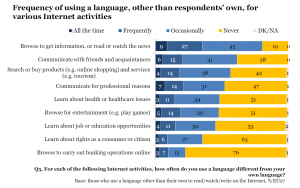
- 90% of European internet users prefer to browse websites in their own language (European Commission survey)
- Even if English is the most frequently used foreign language in the EU, 42% of internet users said they would never buy products if the descriptions are not in their language (European Commission survey).
Language is not just a communication tool: it is a trust signal. As Common Sense Advisory noted, 72% of consumers are more likely to buy if information is presented in their native tongue.
The Concrete Benefits of Localization
Localizing your content sends a message of respect to your customers. It says: “I understand you, I am at home in your market, and I took the time to adapt to you.”
The results are direct:
- Better User Experience: Visitors stay longer and understand your offer better.
- Higher Engagement: Conversing on social media in your audience’s native language creates a real connection, not just a transactional one.
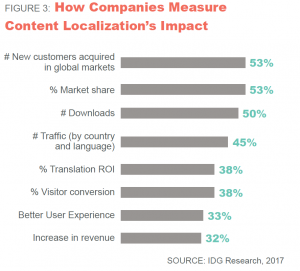
- Sales Growth: 74% of marketing decision-makers confirm that localization is a genuine revenue driver.
But there is a less visible yet crucial benefit: safety. A joke that is funny in France can be a grave offense in Japan. A playful campaign in the US might seem inappropriate in Germany. Localization acts as a cultural filter that protects your brand from costly misunderstandings.
No Localization: The Cost of “Good Enough”
You likely recall the translation “fails” that cost major brands millions and have durably hurt their credibility: Mango’s “Slave” jewlery in France, Coors’ slogan “Turn it Loose” translated crudely in Spain, or Pepsi promising to “bring your ancestors back to life” in China.
These weren’t just accidents. They were symptoms of an approach that separates translation from cultural context. They illustrate perfectly why it is dangerous to settle for literal translation or automation without human expertise.
These examples illustrate the importance of:
- Analyzing the cultural and legal environment before translating a content.
- Choosing your language provider carefully. Your partner must take responsibility, question the content, reasearch the context, and more importantly, be familiar with your target market.
- Aiming for Excellence, Not Minimums: Because your words are the face of your company, they deserve more than a simple linguistic conversion. They deserve to resonate.
So, are you ready to stop viewing localization as an expense, and start seeing it as the heart of your international strategy?
